Kushstar.ca: Full-Stack E-Commerce Migration & Optimization
Overview
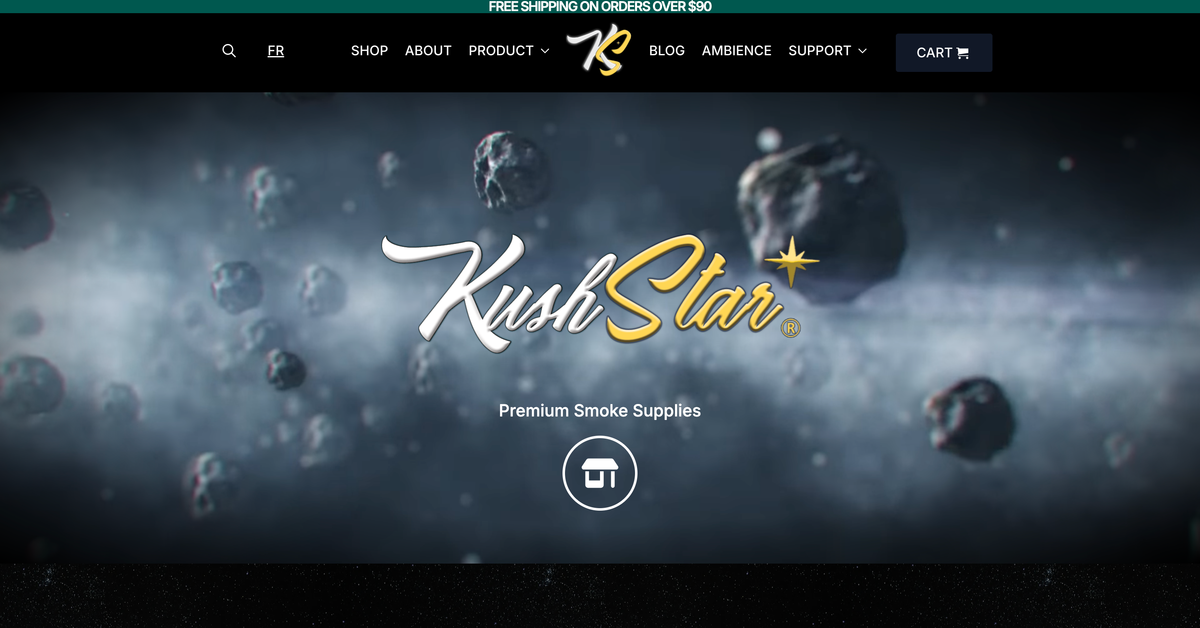
Kushstar.ca represents a complete rebrand and technical overhaul of kushstarpapers.com, a struggling WooCommerce site held together by 50+ plugins, hardcoded inline styles, and the limitations of shared hosting.
The project began with an unconventional introduction: I approached the founder, Marc, while he was photographing products in a public park in Le Plateau, Montreal. A year of iterative design and technical problem-solving later, the new site launched with dramatically improved performance, maintainability, and user experience.
Technical Challenge: Learning WordPress at Scale
I entered this project with minimal WordPress experience. Rather than treating this as a limitation, I approached it as an opportunity to demonstrate my proclivity for adapting to novel challenges and ability to learn new technologies.
Over the course of development, I:
- Architected a custom WooCommerce implementation optimized for the client's specific product catalog and workflow
- Mastered WordPress hooks, filters, and the plugin ecosystem
- Developed basic competence with PHP for custom functionality where off-the-shelf solutions fell short
This wasn't about becoming a "WordPress developer", it was about proving I could rapidly acquire domain expertise in unfamiliar systems and deliver production-ready solutions under real business constraints.
Architecture Decisions: Prioritizing Long-Term Maintainability
Theme Selection & Builder Strategy
I spent significant time evaluating WordPress themes and page builders, weighing technical elegance against practical business needs. The decision matrix included:
- Performance vs. flexibility tradeoffs across popular builders
- Maintenance burden for a non-technical client post-handoff
- Long-term viability and ecosystem support
I ultimately selected Breakdance Builder despite its occasional friction during development. The rationale was simple: site builders provide a visual interface that empowers clients to make content updates independently, without engineering support for every minor change. While working within a stateful builder's constraints can be frustrating for a developer who preferes the determinism of code, the business value of client autonomy outweighed the short-term development friction.
This decision reflects a principle I apply across projects: the best technical solution is the one that aligns with the client's operational reality, not just the one that's most elegant to build.
Systems Engineering: Debugging Plugin Conflicts
The WordPress plugin ecosystem's strength, extensibility, is also its weakness: incompatibilities between plugins are common and often poorly documented.
During integration, I encountered critical conflicts between WooCommerce extensions, caching layers, and theme functionality. Rather than abandoning plugins or forcing the client to compromise on features, I:
- Isolated the conflict sources through systematic disable/enable testing and error log analysis
- Wrote custom must-use plugins (mu-plugins) that act as compatibility shims between conflicting components
- Implemented selective hook priorities and filter overrides to resolve load-order dependencies
These mu-plugins serve as lightweight intermediary layers, intercepting problematic behavior and ensuring smooth interop without modifying vendor code. This approach maintains update compatibility while delivering stable functionality.
This work demonstrates a core engineering competency: when systems don't integrate cleanly, build the abstraction layer yourself.
Performance Optimization: Video Asset Pipeline
The site's design called for high-quality video backgrounds, a UX decision that posed significant performance challenges. Serving unoptimized video files would have destroyed load times and mobile usability.
I implemented a complete video optimization pipeline:
- Sourced and processed royalty-free video assets using FFmpeg
- Optimized encoding parameters for web delivery (webm conversion, appropriate bitrate caps, resolution scaling)
- Hosted assets in a cloud storage bucket with CDN-like delivery characteristics
- Implemented lazy-loading strategies to defer video initialization until viewport entry
The result: cinematic visual experience with minimal performance penalty. Page load times remained under 2 seconds on 4G connections.
Infrastructure: Self-Managed VPS Hosting
Rather than relying on managed WordPress hosting, I deployed the site on a Hetzner VPS with a custom-configured environment. This decision was driven by:
- Cost efficiency at scale (managed hosting premiums add up)
- Full control over server configuration, caching layers, and security hardening
- Automated backup strategy using Hetzner's snapshot system combined with off-site redundancy
I configured the entire stack: Nginx reverse proxy, PHP-FPM optimization, MySQL query caching, and server-level security policies. While managed hosting would have been simpler, self-managing infrastructure gave me direct control over performance tuning and cost optimization, and demonstrated comfort operating at the systems level.
Data Migration: Custom Scripting for Legacy Cleanup
The original site contained years of accumulated data inconsistencies: malformed product metadata, orphaned database entries, broken image references, and incompatible schema structures from previous migrations.
I developed custom migration scripts to:
- Parse and normalize product data from the legacy database
- Reconcile image references and re-associate media files
- Transform old taxonomy structures into the new site's information architecture
- Validate data integrity at each migration stage
The process involved extensive trial and error; debugging edge cases in poorly documented legacy data formats, handling character encoding issues, and resolving foreign key mismatches. While the specifics were complex and varied, the throughline was consistent: write scripts to automate the tedious, then manually verify the critical.
Outcome
The relaunched Kushstar.ca delivers:
- 10x performance improvement over the legacy site
- Client-maintainable content system requiring zero developer intervention for routine updates
- Stable, scalable infrastructure with automated backups and monitoring
- Professional brand presentation aligned with the business's growth trajectory
More importantly, this project demonstrates the skillset that defines effective full-stack engineering: the ability to learn unfamiliar technologies quickly, make pragmatic architectural decisions, debug complex integrations, and deliver production systems that solve real business problems.
Gallery


Technologies: WordPress, WooCommerce, Breakdance Builder, PHP, MySQL, Nginx, FFmpeg, Hetzner VPS, Linux (Ubuntu), Cloud Storage / CDN Integration